SHORT WAVE HEAVEN - update May 2020
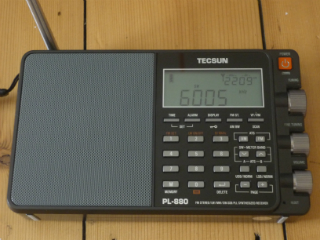
Short Wave radio has been around for a long time. It is a wonderfully reassuring feeling when far from home to listen to a familiar voice on a Short Wave radio.
There is also the thrill of knowing you are hearing a crystal clear signal from a transmitter site that is thousands of miles away. You are out of the control of your local internet provider and your local radio services.
Sadly, this season has appeared to herald the loss of All India Radio's powerful English signal on 9.445 MHz in the evening and the high-quality China Radio relays from Albania have also vanished. There is no sign of any official announcements, so these may be temporary technical glitches. On the plus side, BBC World Service in May has been "clear as a whistle" on short wave for at least 3 hours a day. The BBC is using Vatican Radio relays from Rome to target Africa which seem to work well in the UK in most weather conditions. For the BBC at 7am try 12.015 MHz, at 8am try 15.49 MHz and at 8pm try 6.155 MHz.
Since the April 2020 schedule changes, I have continued the new format of charts (started last year) to make listening even easier. The charts previously were comprehensive and listed by frequency. This format was time consuming to compile and took a lot of time for the listener to find something engaging.
My new format is different. For each hour, the listener is given a running order of about 30 stations that are most worthwhile to try. Doing it this way means you can easily compare the reception quality of the different frequencies for the same station and also get an idea of each broadcaster's strategy for reaching listeners.
For the summer, I have put the top station as number 51, down to about 80. Many radios have enough storage to allow you to set a page for each hour and then up to 100 presets for each page. This means you can check your favourite stations in a couple of minutes. There is less detail, but today time is so precious, the ease of use seemed to me to be the priority for the charts. (I have numbered 1 to 30 for the winter charts)
Here are the summer charts:
Listening in NW Europe on Short Wave Summer 2020
Listening
to BBC World Service Globally Summer 2020
Here are the previous winter charts (Sept 2019-March 2020):
Listening in NW Europe on Short Wave Winter 2019-20
Listening
to BBC World Service Globally Winter 2019-20
One station to highlight in the mornings is Radio Kuwait which beams music and information in English to Europe from 6-9am UK time on 15.53 MHz. Do also try Radio Austria on 6.155 MHz from 6.00-7.15am BST with news in German plus plenty of classical music. Meanwhile China starts up at 8am on 13.71 and 17.49 MHz and continues all day.
In the European evening, there’s a lot more choice. India sends a clear signal for much of the evening to Europe on 9.445 MHz. Romania provides 3 different transmission times. The best BBC hours are from 6-8pm on 6.195 MHz from Oman and 7.485 MHz all the way from the BBC's Singapore relay. At 8pm, try Thailand on 9.92 MHz in English.
The details are in my charts which make reception quick and easy.
Perhaps you don't have a short wave set? Now you can control one in the Netherlands. It is an amazing free opportunity to listen in live to current reception conditions and make sense of my charts, even if you aren't in NW Europe:
ETGD
Radio Club at the University of Twente
Sadly,
BBC
World Service signals are now aimed only at Africa, the Middle East and Asia. But - if the skies are merciful - you can still hear the BBC bouncing off the ionosphere from somewhere distant. And China Radio International usually gives you a powerful signal, proudly telling listeners "we will never give up on Short Wave."
India, Romania and the Vatican are the next most enthusiastic on international radio broadcasting. Turkey, Greece and Saudi Arabia also still target Europe. So don't ditch the Short Wave radio, polish it up and get tuning!
I strongly recommend getting a good short wave radio to really enjoy the short wave listening hobby. One with a variable bandwidth means you can pull in full treble and bass sounds for strong stations. My Tecsun PL-880 has the option to bring in 9 kHz of width, which makes Short Wave sound like FM. Radios with a smaller bandwidth fixed at 2 kHz may always eliminate interference from neighbouring stations, but the sound is flat and not so fun to listen to.
In recent years, many wonderful international radio stations went silent as their bosses found the costs of transmitting on Short Wave (usually $200 an hour) rather inconvenient. However, the stations failed to ask the listeners whether silencing their radio signals was convenient for them.
While internet listening on mobile phones is growing, most people stick online to finding the stations they know. It is too much bother to find something unusual, unlike the instant chance discovery on analogue Short Wave. So a station announcing its Short Wave closure is effectively saying it doesn't want to exist.
In 2014, Voice of Russia stopped explaining its country's actions to the world on Short Wave radio, timed perfectly for its takeover of Crimea.
The BBC World Service cut its English Short Wave service by 60 per cent on 31st March 2013. The Cyprus Short Wave relay station, which had been in use for 50 years, was closed. BBC Arabic is no longer transmitted on Short Wave, except to Sudan. BBC Arabic radio is generally now only available if Arab governments choose to let their people hear the BBC on FM or online.
Now though, there are signs that Short Wave could be coming back into fashion. An effort was made in late 2014 to start a new station to the US and Europe from Florida on 9.395 MHz, appealing to those who just want to be "off grid". It couldn't find enough private funding, but the idea isn't dead. Radio Spain announced a switch off, only to return on Short Wave (although not to Europe) in early 2015. France switched off English to Africa and then switched it back on.
Many feel that the future of Short Wave is offering some signals in digital Short Wave, which overcomes the fading and drop out of traditional Short Wave reception. This can be done by sending the signal in DRM, which stands for the Digital Radio Mondiale standard. New receivers are expected to come to the market soon (check Amazon etc) that can decode DRM, as well as pick up all the other listening bands.
Radio Romania and All India Radio are particularly enthusiastic on DRM, although the digital signal from India to Europe (having travelled 5,000 miles) is not always strong enough to be an effective service. The BBC's DRM service is one hour a day to Europe at 6am UK time from its Short Wave station in Woofferton in Shropshire.
Radio Australia closed its shortwave service to the Pacific - signals that were often heard all over the globe. But Radio New Zealand maintains its shortwave service, understanding that the role of a broadcaster is to provide a service that is free of the unreliability / bother / censorship / hacking and govt monitoring risks that come if you try to deliver international radio programmes solely via the internet.
The BBC has confirmed its Thailand relay station has closed after it failed to reach an agreement with the Thai government for a new lease on its site at Nakhon Sawan.
These sites have useful information:-
Shortwave
listening news, interviews, reviews and more: http://swling.com/blog/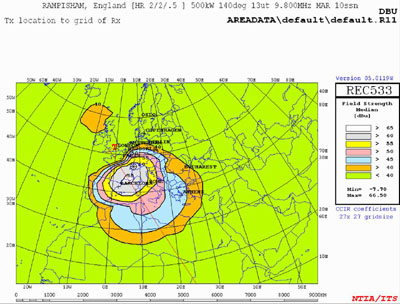
Glenn Hauser's World of Radio: http://www.worldofradio.com/
Here's a brand new site with some great maps indicatinng where signals are targetted: http://shortwave.am/
The official broadcasters' site, but some countries don't take part: http://www.hfcc.org/data/
This one has some nice maps: http://short-wave.info/index.php
The best guide to public radio stations available online is:
www.publicradiofan.com
The blog of Chrissy Brand, the general editor of the BDXC British DX Club, for up to date opinion on what's worth listening to:
And for up to date gossip and news, check out:
http://mt-shortwave.blogspot.co.uk/
http://tradingaswdr.blogspot.co.uk/
ARCHIVE
Listening
in NW Europe on Short Wave Winter 2018-19
Listening
to BBC World Service Globally Winter 2018-19
Listening in NW Europe on Short Wave Summer 2019
Listening
to BBC World Service Globally Summer 2019
BBC Global Short Wave Frequencies - Summer 2018
In all languages, listening in NW Europe from 0400-1400 GMT in September 2018
In all languages, listening in NW Europe from 1400-2300 GMT in September 2018
Here's
what you can hear in English in North West Europe in Summer 2018 - on one A4 sheet.
BBC Global Short Wave Frequencies Winter 2018
Top 30 Stations - hour by hour March 2018
Here's what you can hear in English in North West Europe in December 2017 - on one A4 sheet
In all languages, listening in NW Europe from 0500-1500 GMT in December 2017
In all languages, listening in NW Europe from 1500-2400 GMT in December 2017Top Twenty stations - hour by hour December 2017
BBC Global Short Wave Frequencies - December 2017
In all languages, listening in NW Europe from 0400-1400 GMT in August 2017
In all languages, listening in NW Europe from 1400-2300 GMT in August 2017BBC
Global Short Wave Frequencies - February 2017
Here's what you can hear in English in North West Europe in February 2017 - on one A4 sheet.
In all languages, listening in NW Europe from 0500-1500 GMT in February 2017.
In all languages, listening in NW Europe from 1500-2400 GMT in February 2017.
In
all languages, listening in NW Europe from 0400-1400 GMT in August 2016
BBC Global Short Wave Frequencies - Summer 2016
BBC
Global Short Wave Frequencies - January 2017
Here's what you can hear in English in North West Europe in Winter 2015-16 - on one A4 sheet.
In all languages, listening in NW Europe from 0500-1500 GMT in January 2016.
In all languages, listening in NW Europe from 1500-2400 GMT in January 2016.
BBC Global Short Wave Frequencies - Winter 2015-16
Here's what you can hear in English in North West Europe in Summer 2015 - on one A4 sheet.
BBC Global Short Wave Frequencies - Summer 2015
In all languages, listening in NW Europe from 0400-1400 GMT in August 2015
In all languages, listening in NW Europe from 1400-2300 GMT in August 2015
BBC Global Short Wave Frequencies - Winter 2015
Here's what you can hear in English in North West Europe in Winter 2014 - on one A4 sheet.
In all languages, listening in NW Europe from 0500-1500 GMT in February 2015.
In all languages, listening in NW Europe from 1500-2400 GMT in February 2015.
BBC Global Short Wave Frequencies - Winter 2014
BBC Global Short Wave Frequencies - summer 2014
Here's what you can hear in English in North West Europe in Summer 2014 - on one A4 sheet.
In all languages, listening in NW Europe from 0400-1400 GMT in May 2014.
In all languages, listening in NW Europe from 1400-2300 GMT in May 2014.
Listening in English on Short Wave in North West Europe - Summer 2013
This tells you everything heard in North West Europe in English in January 2013:
Here are details of the BBC World Service broadcasts for winter 2013/14.
Listening in English on Short Wave in North West Europe - Winter 2012/13
BBC Frequencies by area Summer 2013
Summer 2013 UK listening in all languages - Early
Summer 2013 UK listening in all languages - Late
BBC World Service English schedule Winter 2012-13
Summer 2012 saw the disappearance of Radio Netherlands in Europe, while Vatican Radio ended its information programmes to western Europe. But there are still many stations on the air and these 4 charts take you on a tour of what you can hear as you wander up and down the short wave bands in the winter 2012-13 schedule:
Daytime listening in NW Europe on Short Wave 13-6MHz
Daytime listening in NW Europe on Short Wave 21-15MHz
After dark listening in NW Europe on Short Wave 21-7MHz
After dark listening in NW Europe on Short Wave 9-3MHz
If you have comments or suggestions or content for this site please email editor@shortwavetimes.com.